PARABLE 16 OF 25
The Two Sons
What is the difference between words and repentance?
Matthew 21:28–32
Read in the NKJV
01 · BIBLICAL CONTEXT
Read Jesus’ Words
Read Matthew 21:28–32 in the NKJV, including the surrounding discussion. The following narrative summary is not a Bible quotation.
02 · THE PARABLE
What Happens in the Story?
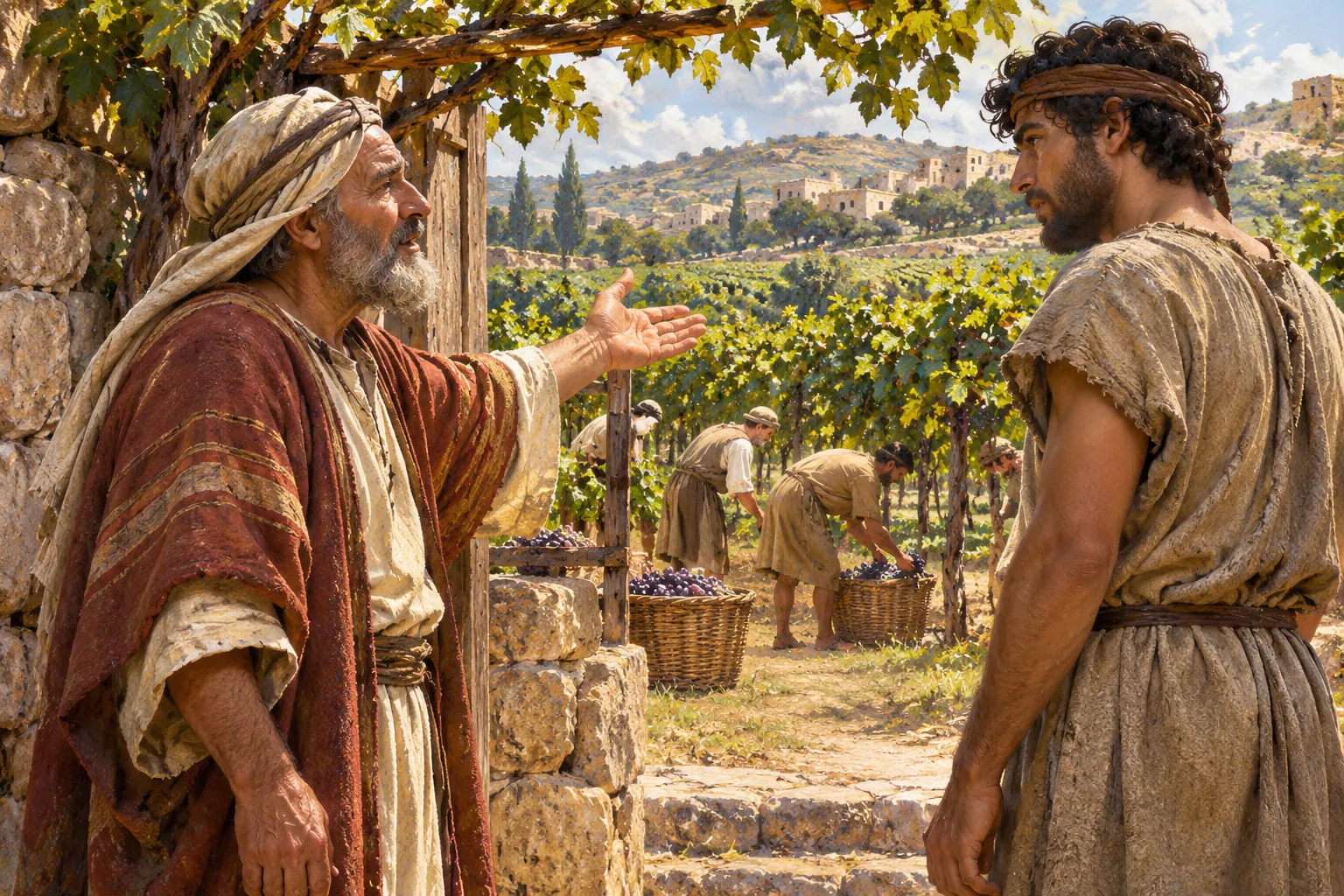
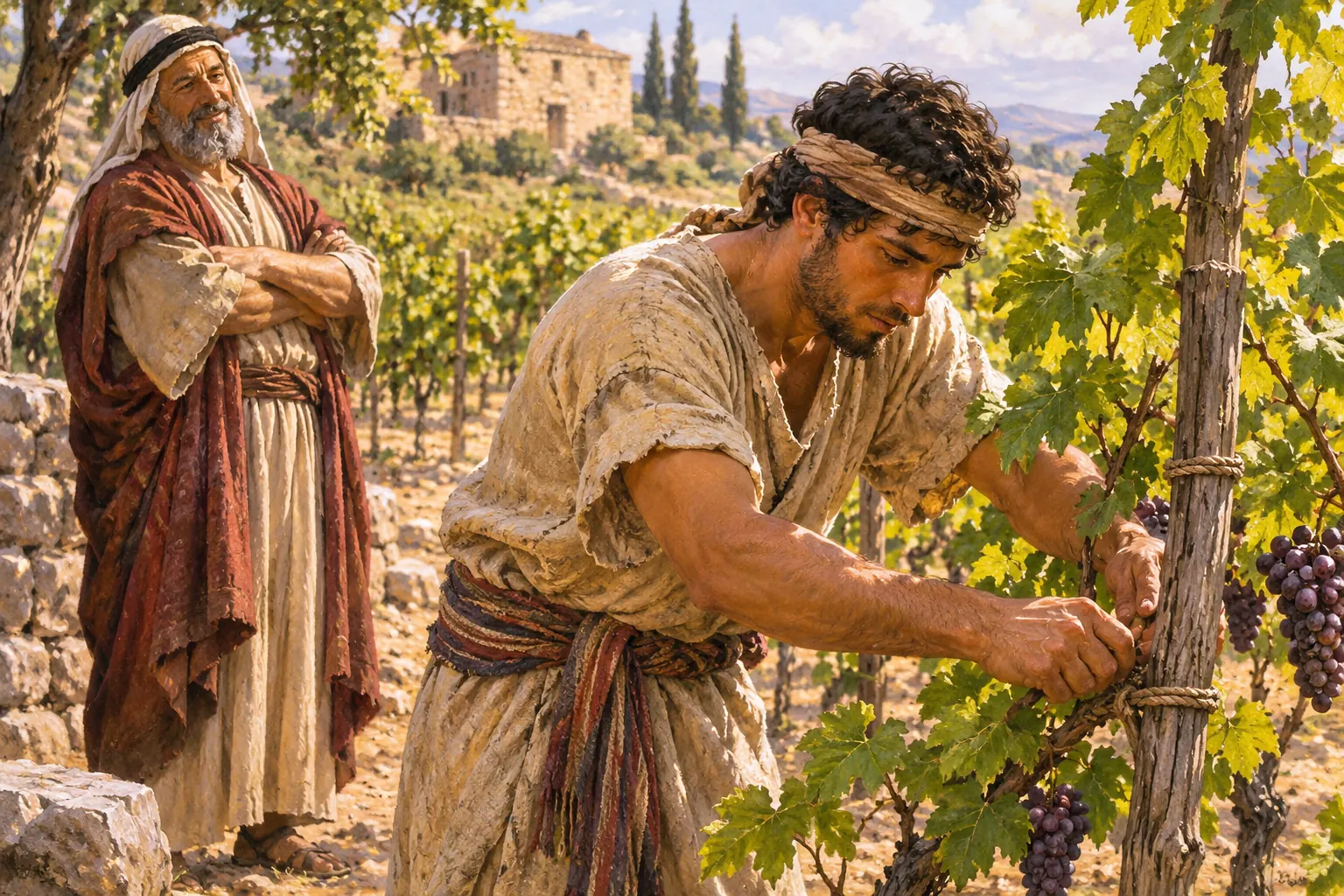
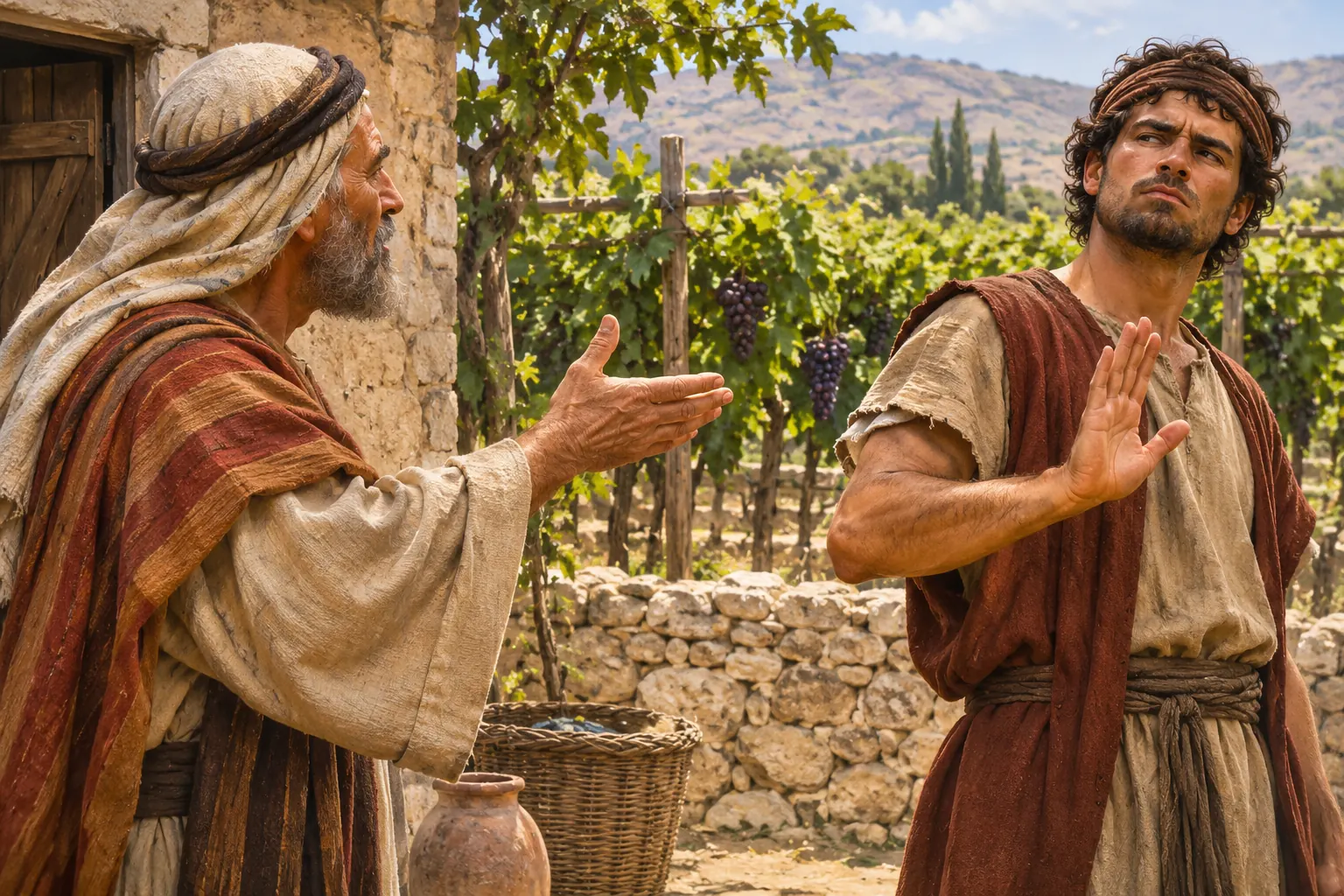
One son first refuses his father’s command but later obeys. Another promises obedience yet fails to act.
03 · CENTRAL MEANING
What Is the Message?
Jesus confronts religious leaders who outwardly professed obedience but resisted God’s call to repentance.
04 · REFORMED EXPLANATION
How Does This Point to Christ?
Saving faith bears fruit. Obedience does not buy salvation; it is the grateful response of a heart transformed by grace.
Christ Is the Center.
God’s Word leads us to repentance, faith, and grateful obedience.
LUKE 24:2705 · PERSONAL EXAMINATION
Questions for Reflection
Select a question to consider its biblical application.
These questions are aids to reflection, not an infallible assessment of salvation.
06 · PRACTICAL APPLICATION
How Should We Respond?
Repent honestly and let your actions accord with your profession of faith.
DEEPER STUDY · SCRIPTURE AND DOCTRINE
Understanding This Parable in Context
Matthew 21:28–32 occurs as Jesus confronts the religious authorities who challenge His authority. The father commands both sons to work. The son who first refuses ultimately does the father’s will; the son who politely promises never follows through. Jesus connects this distinction with those who received John the Baptist’s call to righteousness and repentance.
A Careful Reformed Interpretation
The text challenges outward respectability and self-justifying religion. A promise of obedience cannot substitute for obedience, while past rebellion need not keep a repentant sinner from God’s mercy. Salvation is not wages for work in the vineyard: Scripture teaches that good works follow saving grace (Ephesians 2:8–10). Repentance is a change of mind and course, not merely an impressive verbal confession.
Faithful Christian Application
Consider whether you use orthodox language to avoid doing what God commands. Ask Him for grace to repent honestly and obey from the heart. Welcome transformed sinners instead of assuming those with respectable histories are automatically nearer the kingdom.
FINAL KEY TRUTH
The Two Sons
Saving faith bears fruit. Obedience does not buy salvation; it is the grateful response of a heart transformed by grace.