PARABLE 07 OF 25 · JUDGMENT & RETURN
The Rich Man and Lazarus
Can wealth protect us from death and divine judgment?
LUKE 16:19–31
Read the passage in the NKJV
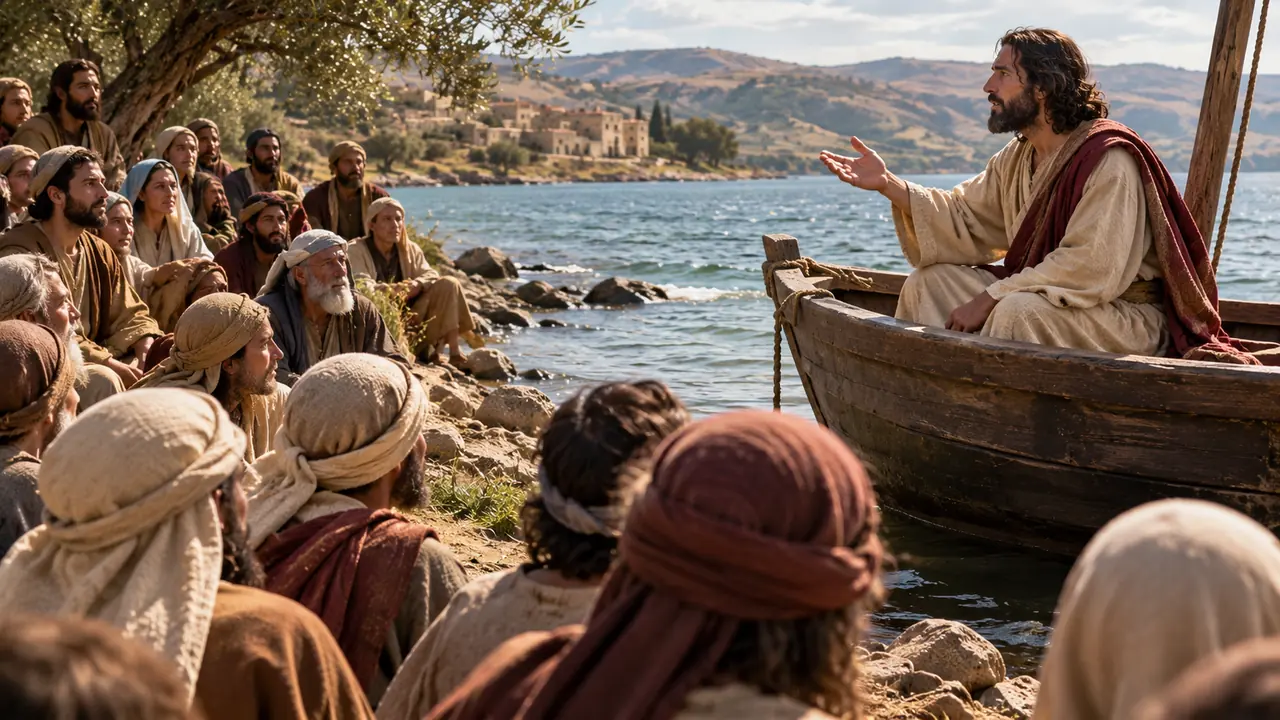
01 · BIBLICAL CONTEXT
Where Does Jesus Teach This Parable?
Read Luke 16:19–31 carefully in its surrounding context. This explanation distinguishes what Jesus said in the passage from theological conclusions drawn from the whole of Scripture.
Scripture references: Luke 16:19–31 · NKJV
02 · THE PARABLE
What Happens in the Story?
A wealthy man lives in luxury while Lazarus suffers near his gate. Both die. Their situations are reversed, and the rich man learns that the gulf separating the dead cannot be crossed.
The flowchart summarizes the biblical narrative; it is not a direct Scripture quotation.
03 · CENTRAL MEANING
What Is Jesus Teaching?
Jesus challenges the Pharisees’ love of money in Luke 16:14. The parable warns about hardened hearts, neglected mercy, and an irreversible judgment after death. It is not saying poverty automatically earns salvation or money itself condemns.
Observe the Context
A wealthy man lives in luxury while Lazarus suffers near his gate. Both die. Their situations are reversed, and the rich man learns that the gulf separating the dead cannot be crossed.
Hear the King’s Teaching
Abraham points to Moses and the Prophets as sufficient testimony calling people to repentance. The ending anticipates the rejection of testimony even when someone rises from the dead, directing us toward Christ’s resurrection.
04 · REFORMED BIBLICAL UNDERSTANDING
How Does This Fit God’s Plan of Redemption?
Our eternal standing depends on God’s grace, not our financial condition. Those transformed by Christ must not ignore the needy.
Christ Is the Center of God’s Word.
God’s grace calls us to hear the Scriptures, trust His Son, and live to His glory.
LUKE 24:27 · EPHESIANS 2:8–1005 · PERSONAL EXAMINATION
Questions for the Heart
Select a question to consider a biblical application. These prompts are aids to reflection, not tests of whether God has saved someone.
Look to Jesus Christ and the truth of Scripture, not to your performance in this exercise.
06 · PRACTICAL APPLICATION
How Should We Respond?
Listen to Scripture now, repent of greed, and show concrete compassion while you have opportunity.
DEEPER STUDY · SCRIPTURE AND DOCTRINE
Understanding This Parable in Context
Luke 16 places this account near Jesus’ confrontation of those who love money (Luke 16:14–15). The rich man dresses and feasts magnificently while Lazarus lies suffering at his gate. After death their situations are reversed; the rich man’s request for relief and warning for his brothers receives the answer that Moses and the Prophets must be heard.
A Careful Reformed Interpretation
The passage teaches an irreversible seriousness to judgment and rejects the idea that wealth establishes divine favor. It does not teach that the poor automatically inherit heaven or that prosperity is necessarily proof of unbelief. Nor should its narrative images be used to construct a detailed map of the unseen world beyond Jesus’ teaching. The final appeal to someone rising from the dead directs attention to the sufficiency of God’s revealed Word and the eventual resurrection of Christ.
Faithful Christian Application
Read the warnings of Scripture while opportunity remains, repent of a heart closed to the suffering of others, and place your confidence in Jesus Christ rather than outward circumstances. Mercy toward the poor is a fruit of grace, not a purchase of eternal life.
PARABLE 07 · FINAL KEY TRUTH
The Rich Man and Lazarus
Abraham points to Moses and the Prophets as sufficient testimony calling people to repentance. The ending anticipates the rejection of testimony even when someone rises from the dead, directing us toward Christ’s resurrection.