PARABLE 02 OF 25 · JUDGMENT & RETURN
The Wheat and the Tares
Why does God allow the righteous and the wicked to live together until judgment?
MATTHEW 13:24–30, 36–43
Read the passage in the NKJV
01 · BIBLICAL CONTEXT
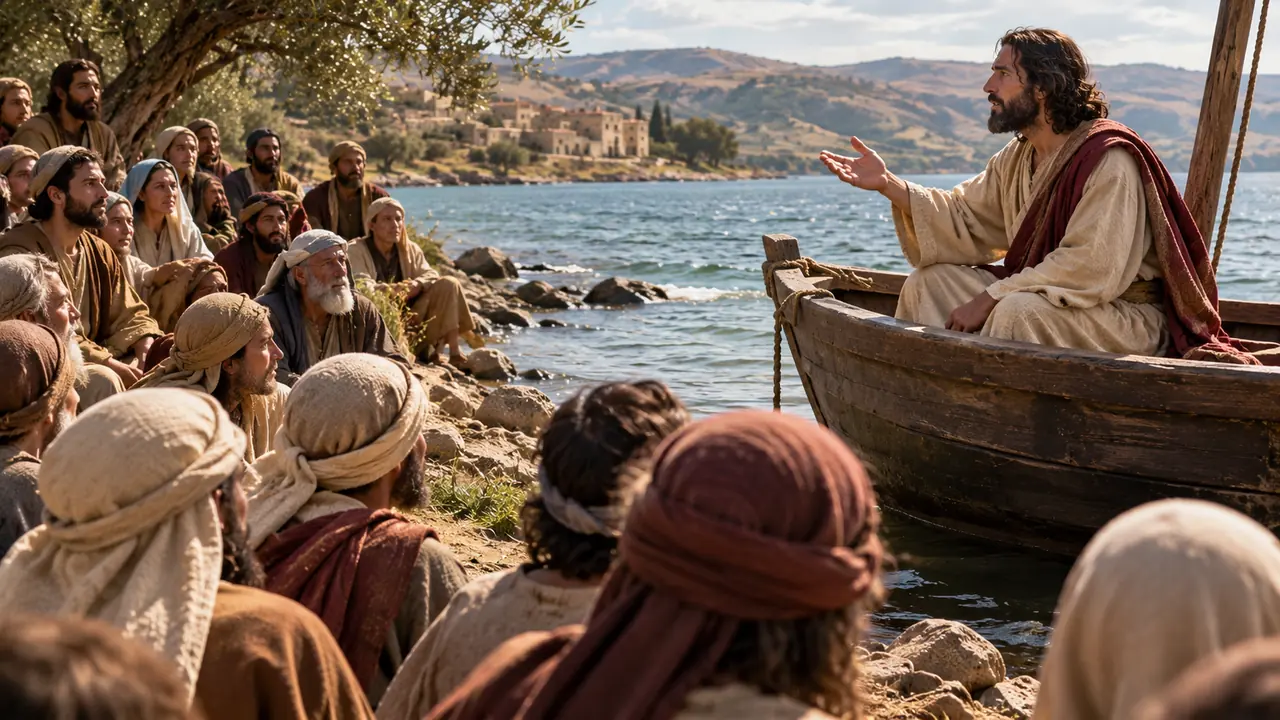
Where Does Jesus Teach This Parable?
Read Matthew 13:24–30, 36–43 carefully in its surrounding context. This explanation distinguishes what Jesus said in the passage from theological conclusions drawn from the whole of Scripture.
Scripture references: Matthew 13:24–30, 36–43 · NKJV
02 · THE PARABLE
What Happens in the Story?
Jesus tells of a man who sows good seed. An enemy secretly plants weeds among the wheat. The servants want to pull them up, but the owner tells them to let both grow until harvest.
The flowchart summarizes the biblical narrative; it is not a direct Scripture quotation.
03 · CENTRAL MEANING
What Is Jesus Teaching?
Jesus explains that the sower is the Son of Man, the field is the world, the good seed are sons of the kingdom, the weeds are sons of the wicked one, and the enemy is the devil. The harvest is the end of the age and the reapers are angels.
Observe the Context
Jesus tells of a man who sows good seed. An enemy secretly plants weeds among the wheat. The servants want to pull them up, but the owner tells them to let both grow until harvest.
Hear the King’s Teaching
The Son of Man will execute the final separation. His patience now is not indifference to evil; judgment belongs to Him rather than to human impatience.
04 · REFORMED BIBLICAL UNDERSTANDING
How Does This Fit God’s Plan of Redemption?
Christ warns of real judgment and promises the righteous will shine in their Father’s kingdom. Our hope is His saving righteousness, not visible religious membership.
Christ Is the Center of God’s Word.
God’s grace calls us to hear the Scriptures, trust His Son, and live to His glory.
LUKE 24:27 · EPHESIANS 2:8–1005 · PERSONAL EXAMINATION
Questions for the Heart
Select a question to consider a biblical application. These prompts are aids to reflection, not tests of whether God has saved someone.
Look to Jesus Christ and the truth of Scripture, not to your performance in this exercise.
06 · PRACTICAL APPLICATION
How Should We Respond?
Hear Christ’s warning, reject self-righteous attempts to identify every hidden heart, and remain faithful while awaiting His judgment.
DEEPER STUDY · SCRIPTURE AND DOCTRINE
Understanding This Parable in Context
Matthew 13:36–43 is unusually important because Jesus supplies the interpretation of His own story. He explicitly identifies the field as the world, the good seed as the sons of the kingdom, the tares as the sons of the wicked one, the enemy as the devil, and the harvest as the end of the age. These identifications should guide interpretation instead of replacing them with our own symbols.
A Careful Reformed Interpretation
The command not to uproot the tares is not a prohibition of biblical church discipline. Matthew 18:15–17 and 1 Corinthians 5:1–13 still require churches to address open, unrepentant sin. The story concerns the final separation, which Christ entrusts to His angels rather than to human attempts to see hidden hearts. Nor does it teach two different kinds of salvation: Jesus saves His people, and He will finally judge evil.
Faithful Christian Application
The parable therefore offers both patience and solemn warning. We may proclaim the Gospel to the world without pretending to possess Christ’s knowledge of every soul. Judgment is certain, but until the harvest Christ calls sinners to repentance and faith (Matthew 13:40–43).
PARABLE 02 · FINAL KEY TRUTH
The Wheat and the Tares
The Son of Man will execute the final separation. His patience now is not indifference to evil; judgment belongs to Him rather than to human impatience.